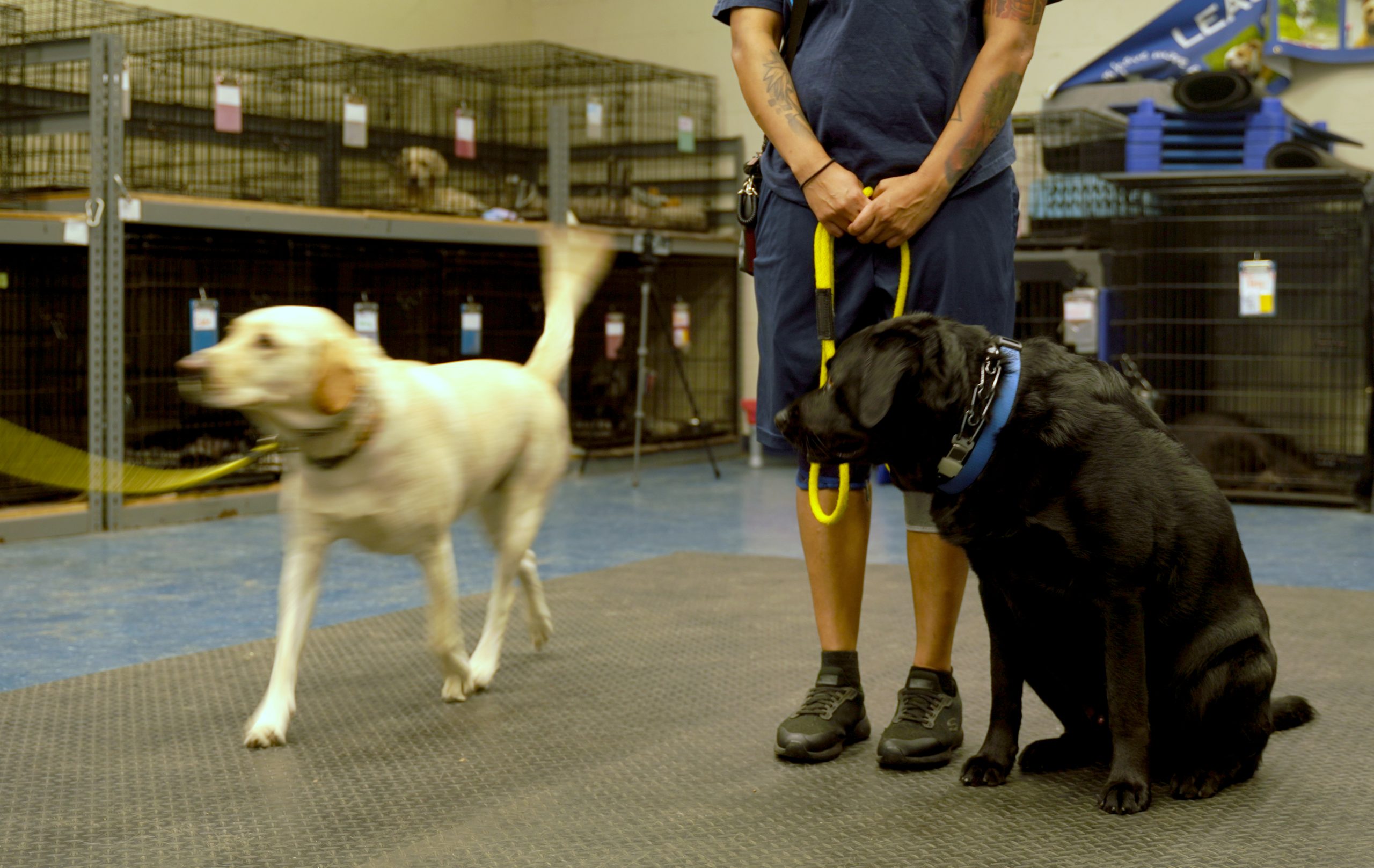

We often talk to exasperated dog owners that are struggling to understand why their dog won’t come in from the backyard when called, even though they always come running when beckoned inside the house. “But they KNOW this!”
On some level, they probably do know what come means. But there are a lot of steps in between coming when called inside their own home to recalling in the backyard. In the second situation, we’ve added the challenges of both distance and distractions. They have to say no to a lot of other options outside, and stay focused for a much longer time to complete the desired task.
Managing our dogs’ training success includes setting them up for challenges that are hard enough to test and stretch their skills, but not so difficult that they can’t succeed. We have gotten quite proficient at finding intermediate steps for most of life’s distractions so that we can build our dogs’ skills up systematically. You’ve got to walk before you can run!
Often once dog owners start thinking about these pesky behavior problems in terms of a step by step training challenge, getting to the end goal doesn’t seem so insurmountable.
We are starting a series where we break down some of our most requested training problems and show you what intermediate steps will help get you to a dog that will listen even with high distractions, and also where you could go to work on those steps.
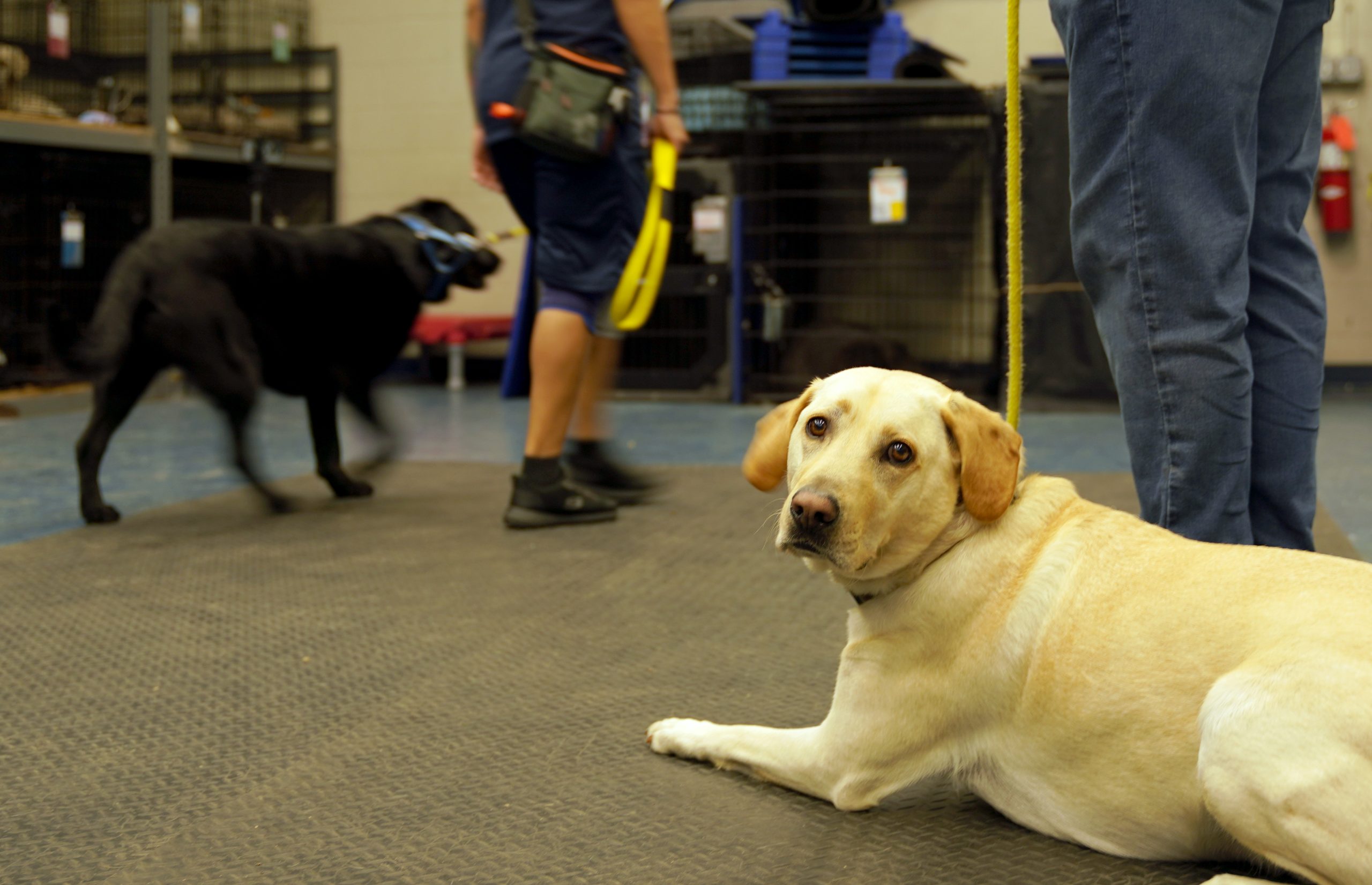
Today, let’s break down dog distractions.
No matter if your dog thinks every dog they see is a potential new best friend and can’t contain their excitement, if your dog is nervous about dogs and needs their confidence built to feel safe around their peers, or if your dog thinks other dog should be eradicated from the face of the earth, they CAN learn to behave in the presence of others. And while the training approach will need to be tailored to each of these goals, how we progress through dog distractions will be the same, regardless of their inner feelings.
As you work through the following dog distractions, keep some things in mind.
- If your dog is so excited they are uncontrollable, they become panicked, or are putting on aggressive displays, then your dog distractions are too difficult and you should seek out situations at a lower level.
- Some dogs will only be distracted by certain types of dogs. Small dogs, big dogs, fluffy dogs. If your dog is particularly afraid of big dogs, you’ll need to practice around big dogs.
- Training should be safe (physically and emotionally) for the dog in training, the distraction dogs, the owner/handler and the community. If you are unsure how to progress and make sure all parties are safe, please reach out to a local trainer. We would love to help you. As a general rule, do not allow dogs to approach each other during training.
DOG DISTRACTIONS
- Neutral Dog
A calm, still dog that is neither offering an invitation to play, or issuing a challenge is the ideal first level dog distraction. Practice with different sized and shaped neutral dogs if they are available.
- Multiple Neutral Dogs
When one neutral dog is easy work, we will add a few more neutral friends as the next training challenge. Often, this is done with the neutral dogs on a place command which allows for some minor dog movement from the neutral dogs since they can turn in place and change position.
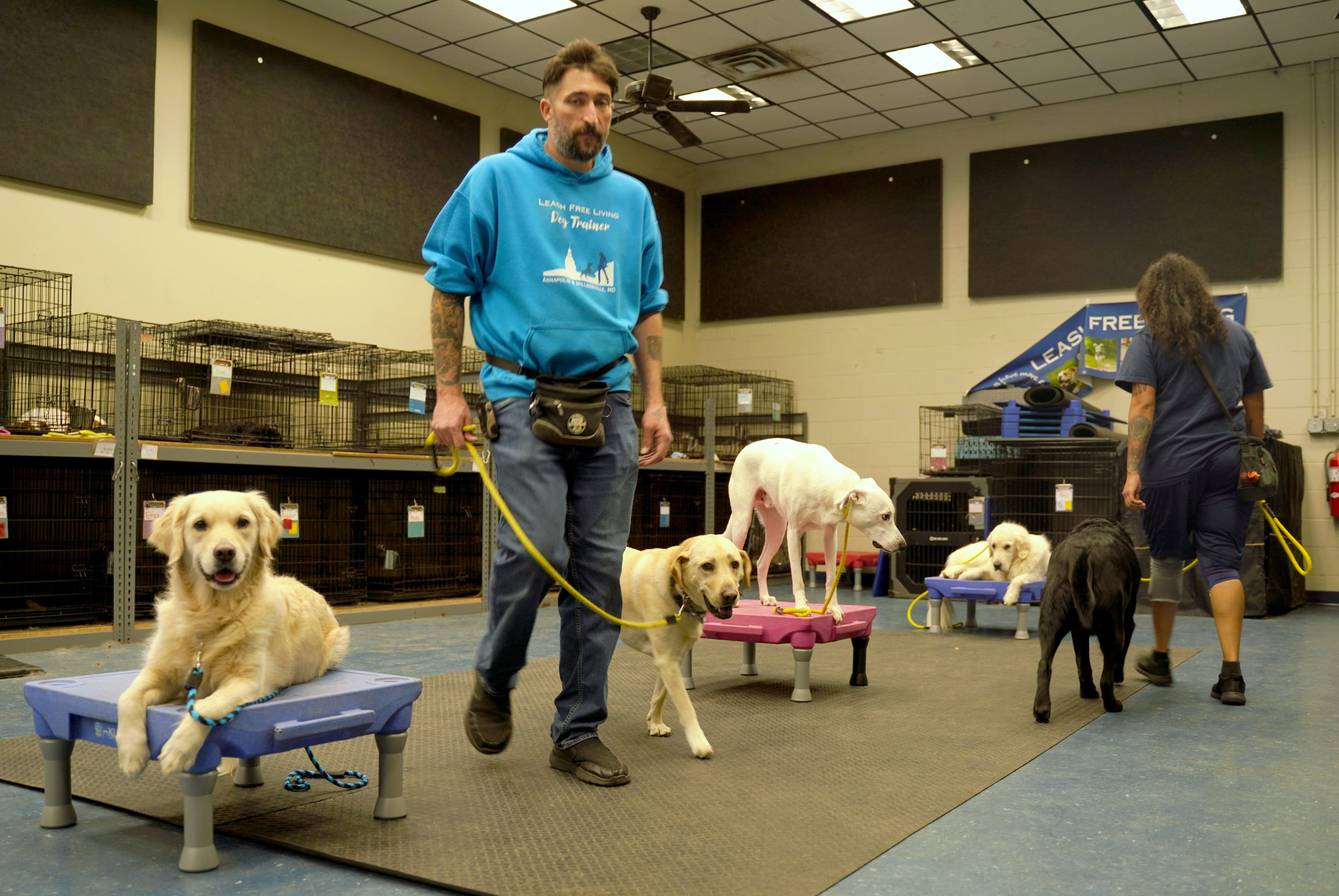
- Moving Dog
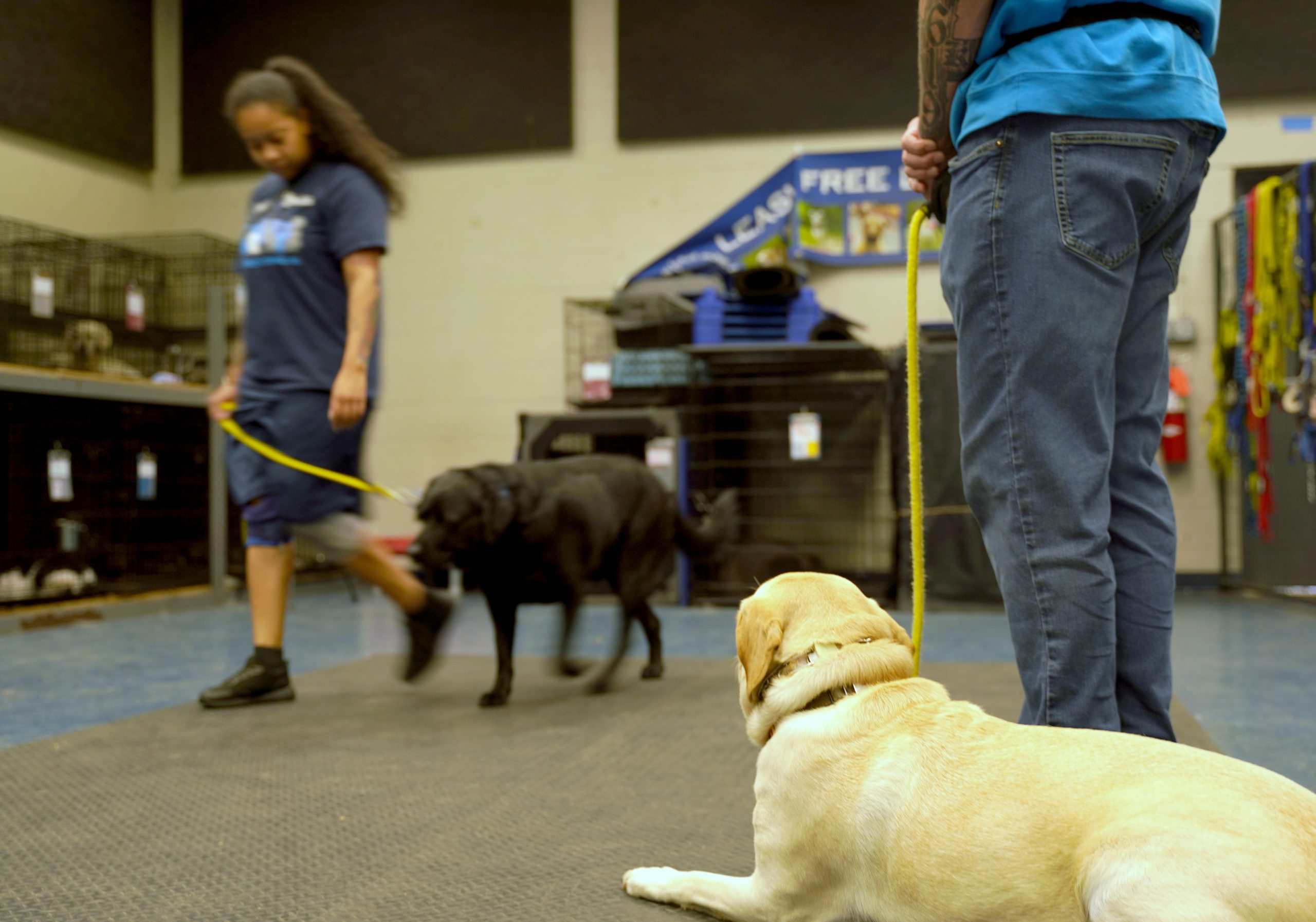
Now we need our neutral dogs to move. Sometimes we accomplish this by directing our neutral dogs to go from one place to another at a distance, and sometimes we use a second handler to walk with a dog distraction. Walking on its own can be a big jump since the training dog may have gotten accustomed to the fact that the neutral dogs are predictably always in one, unmoving spot. When they can handle a walking dog, we can have the dog trot or run to increase difficulty.
- Playing Dog
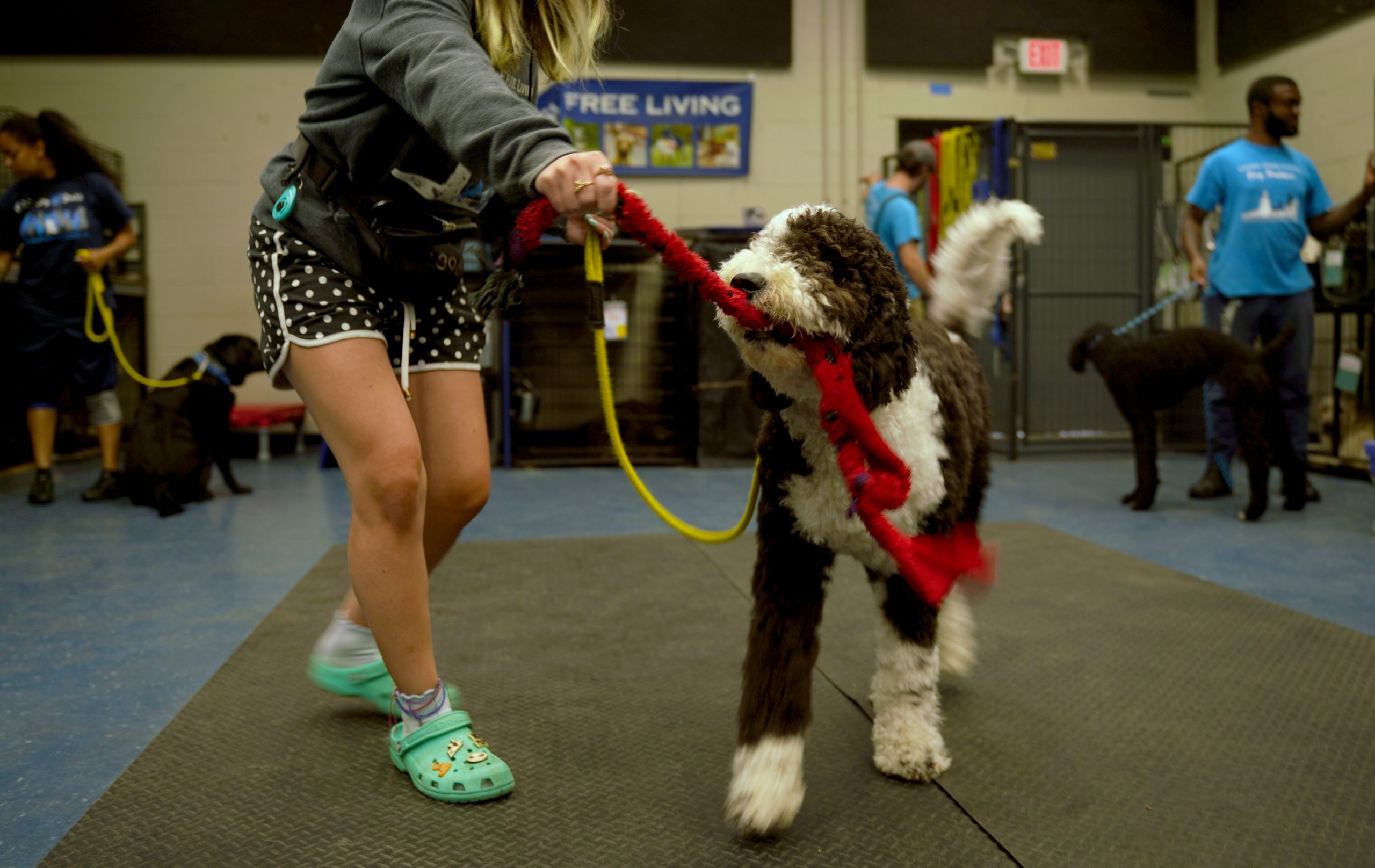
A dog playing tug-of-war, or fetch transforms our neutral dogs to a much more rousing picture that is often hard to resist!
- Barking Dog
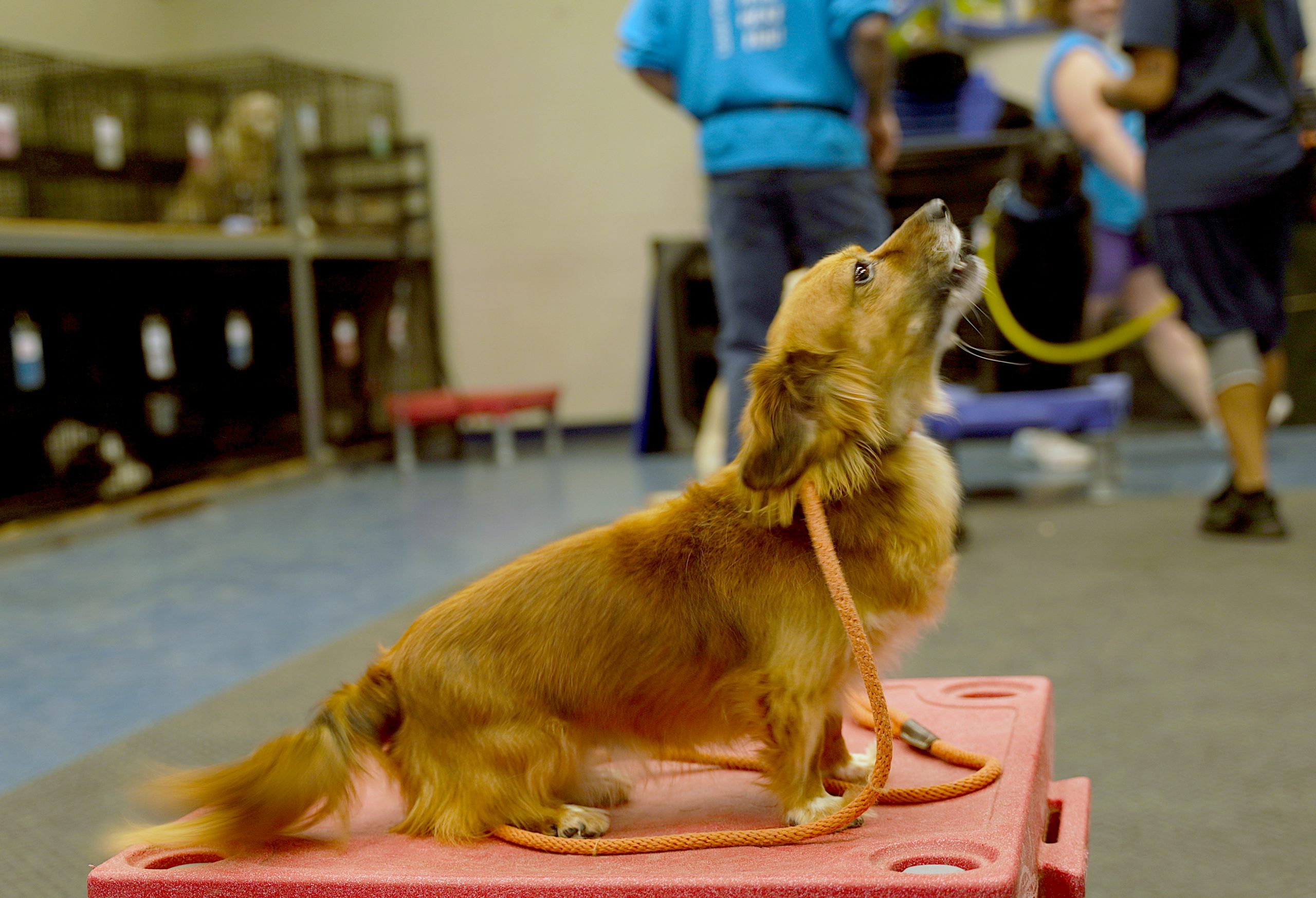
A barking dog is our next challenge to help our dogs resist the urge to respond to the confrontation issued by other reactive dogs. We use dogs that have learned to “speak” on command for this task. We would not allow a dog in our charge to practice barking at another dog. Bad manners are just bad manners.
- Passing Dog/Close Dog
Finally, we will practice decreasing the distance between our training dog and the distraction dogs. When we get to be within leash length of each other it might be necessary to introduce other safety precautions, like muzzle training for our aggressive dogs. Passing a dog head on along a trail or sidewalk is often our final challenge since they both put dogs in close proximity to each other, and require them to approach head-on which is very confrontational for dogs.