

We love to see a muzzle trained dog. We know owners that have taken the time to muzzle train their dog are taking the right steps to tackle big training goals, and keep their dog and community safe in the process. It is one of our favorite tools for behavioral rehabilitation cases.
We do a lot of behavioral rehab training at Leash Free Living. Every day we are helping dogs overcome their fears, curb their aggression, and blossom into self assured, and mannerly companions. We don’t take that responsibility lightly and we know there is little room for error when dealing with aggression. Anne Arundel County law gives few strikes to dogs with reported bites, and the consequences start at a warning but escalate quickly to extremely restricted freedoms and even euthanasia. It is always our priority to limit the risk of biting not only for our own safety, but also for the dog’s safety.
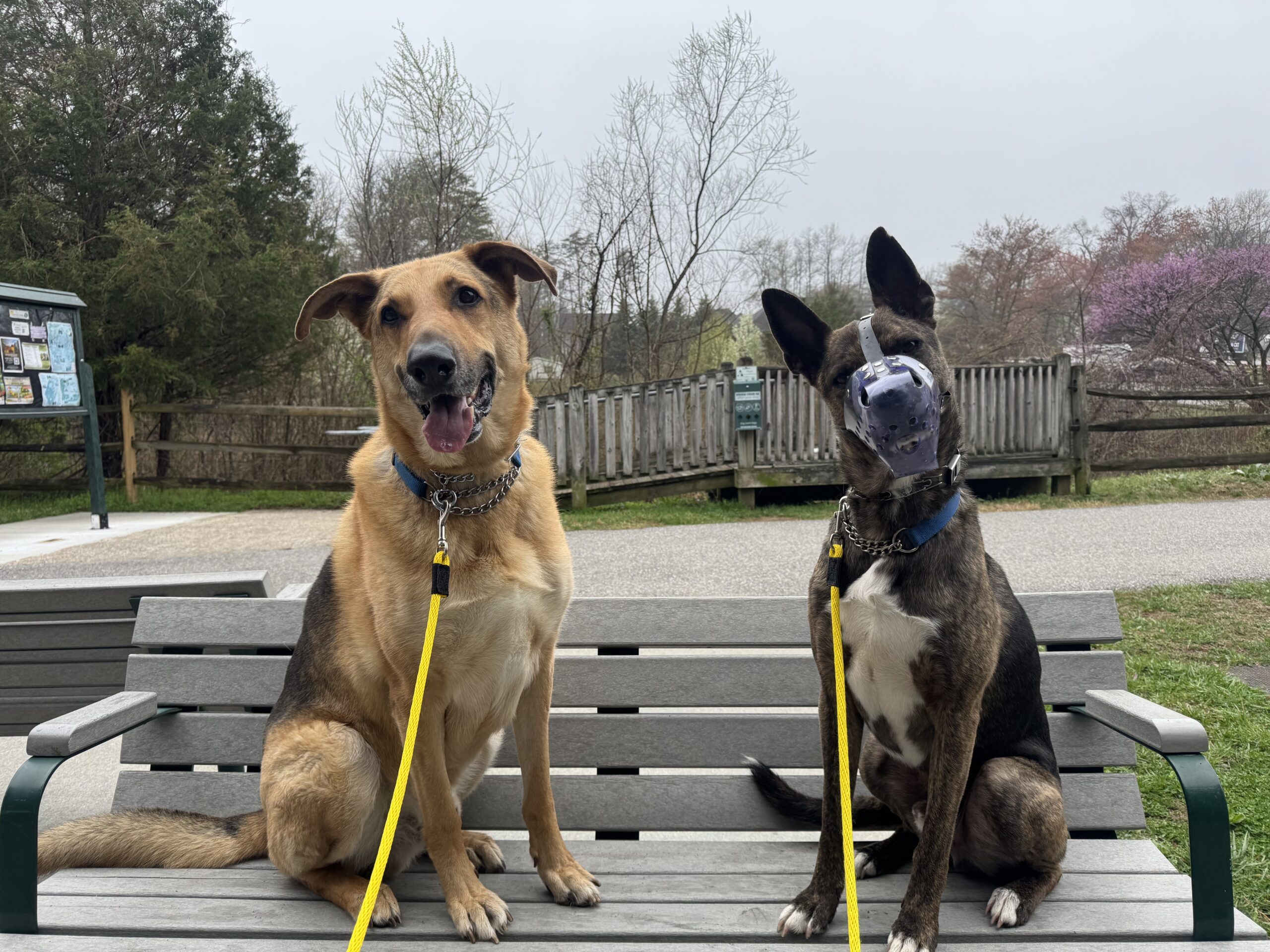
Common Muzzle Training Situations
Grooming Behavior & Body Handling
When we have a dog that objects with their teeth to being handled at the vet, by the groomer, or for routine care like nail trims, baths, or wiping muddy feet off, a muzzle is always the first thing that we train. We address the body handling directly, our goal is to slowly desensitize the dog by creating positive associations with the handling itself, and the tools associated with the handling (brush, clippers, nail grinder, etc).
During training for these tasks, however, we are often in compromising positions where it is difficult to block attempts at biting. The muzzle keeps everyone safe, and keeps the dog from practicing bad behavior. If they were to be successful at landing a bite that delayed or stopped the exercise, that would be an unnecessary setback in their training.
Muzzles in these instances are a great back up to keep everyone safe on the path to success.
Redirected Aggression
Some dogs get so excited and frustrated by distractions that they will bite anything that is nearby, which can be their owners, other pets in the household, or bystanders. Our goal with these dogs is to teach them emotional self control. They need coping mechanisms for dealing with arousal and impulse control. We start that process with mild distractions, and work up until they are ready for real life distractions. Sometimes, however, we can not accurately predict distractions, or sequester them away from real life for their entire training program. In those cases we need to be prepared to handle a dog that is a bite risk.
Muzzles are a great fail-safe for those moments to give the owner peace of mind that they can train their dog safely while they are helping them work towards those goals.
Risky Dog to Dog Socialization
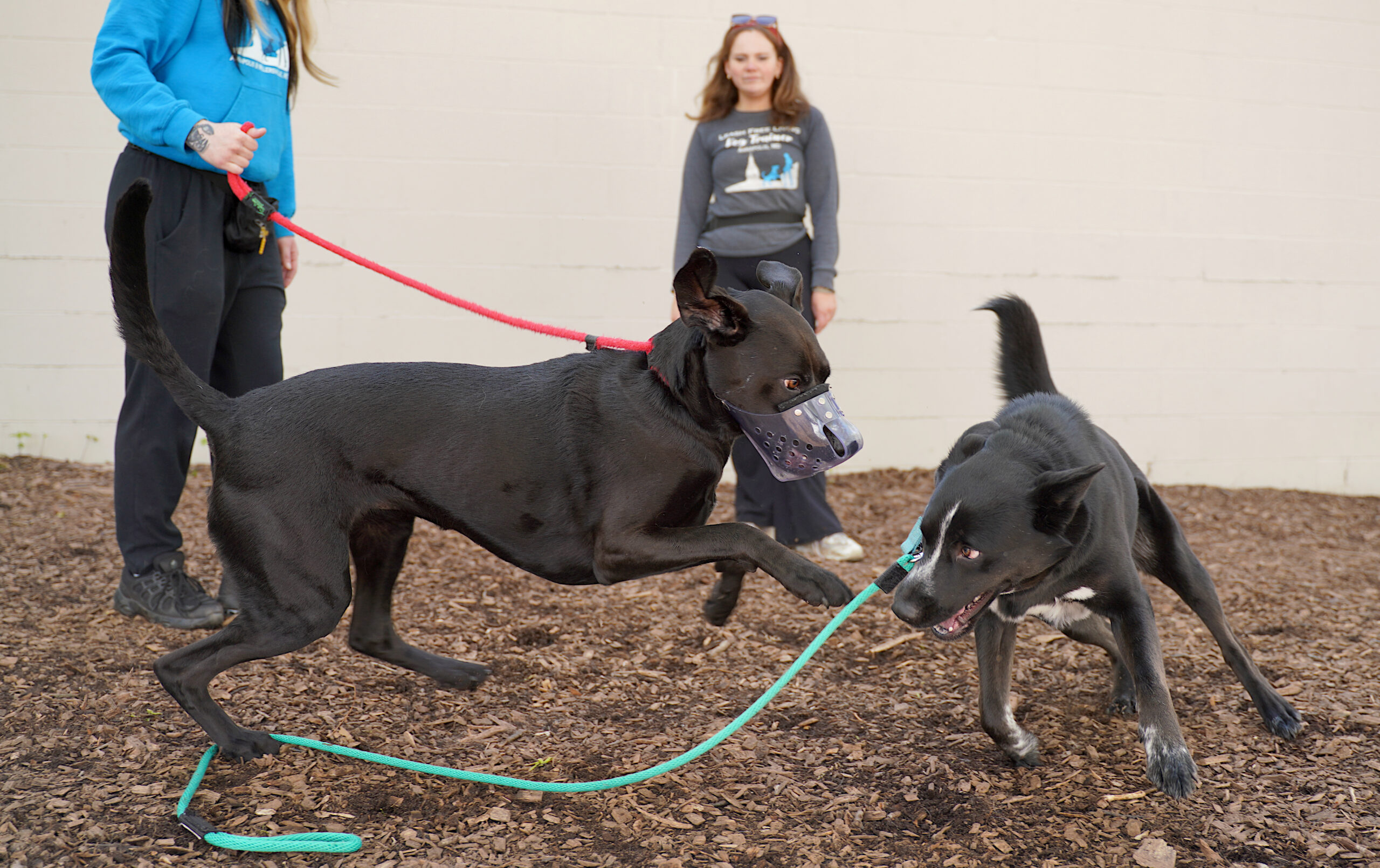
We have great success getting dogs of questionable sociability to like and play with other dogs. We do this with the help of some of our friendly and reliable training dogs. Those helper dogs will only stay friendly and reliable if they can trust that we only put them in safe situations with other dogs.
If a dog has a history of injuring another dog, has questionable behavior when interacting with dogs, or is giving mixed signals, we will muzzle train them before allowing them to play with others.
Once the dog is accustomed to the muzzle, it allows us to give them more liberties when playing, and we can be sure that we are not socializing one dog at the expense of another. Everyone can stay safe and happy. Dogs are social animals and interacting with others is an important part of their well being, and muzzle training has been a game changer for some of our dog-dog socialization clients.
Risky Dog to Human Socialization
In most cases, dog to human aggression is a case of what we call “stranger danger.” It can be important for these dogs to meet new people and be safely handled by others throughout their life. The first goal with these dogs is to get them to be calm, mannerly and curious around other people (without interacting with them). When we are ready to start introducing handling by others, a muzzle is a great way to make sure our “stranger” stays safe and confident. You will not likely have a lot of volunteers to sign up for interacting with a biting dog without it.
Defensive Safety Net
We have come to expect that dogs, people and children will behave unpredictably in public spaces. People are not respectful of dogs or personal space. If you have a dog that will bite and injure 1) a loose dog that runs up in their face, 2) a stranger that pets them as you pass by, 3) a child that runs up to say hello without warning, then we will have that dog in a muzzle in public places as a defensive measure.
We believe these dogs with training goals have the right to explore and enjoy public spaces just like any other, but we are still always aware of how few strikes a dog has won’t jeopardize their life, or the life of a child or dog, for the chance to walk in a new or interesting place.
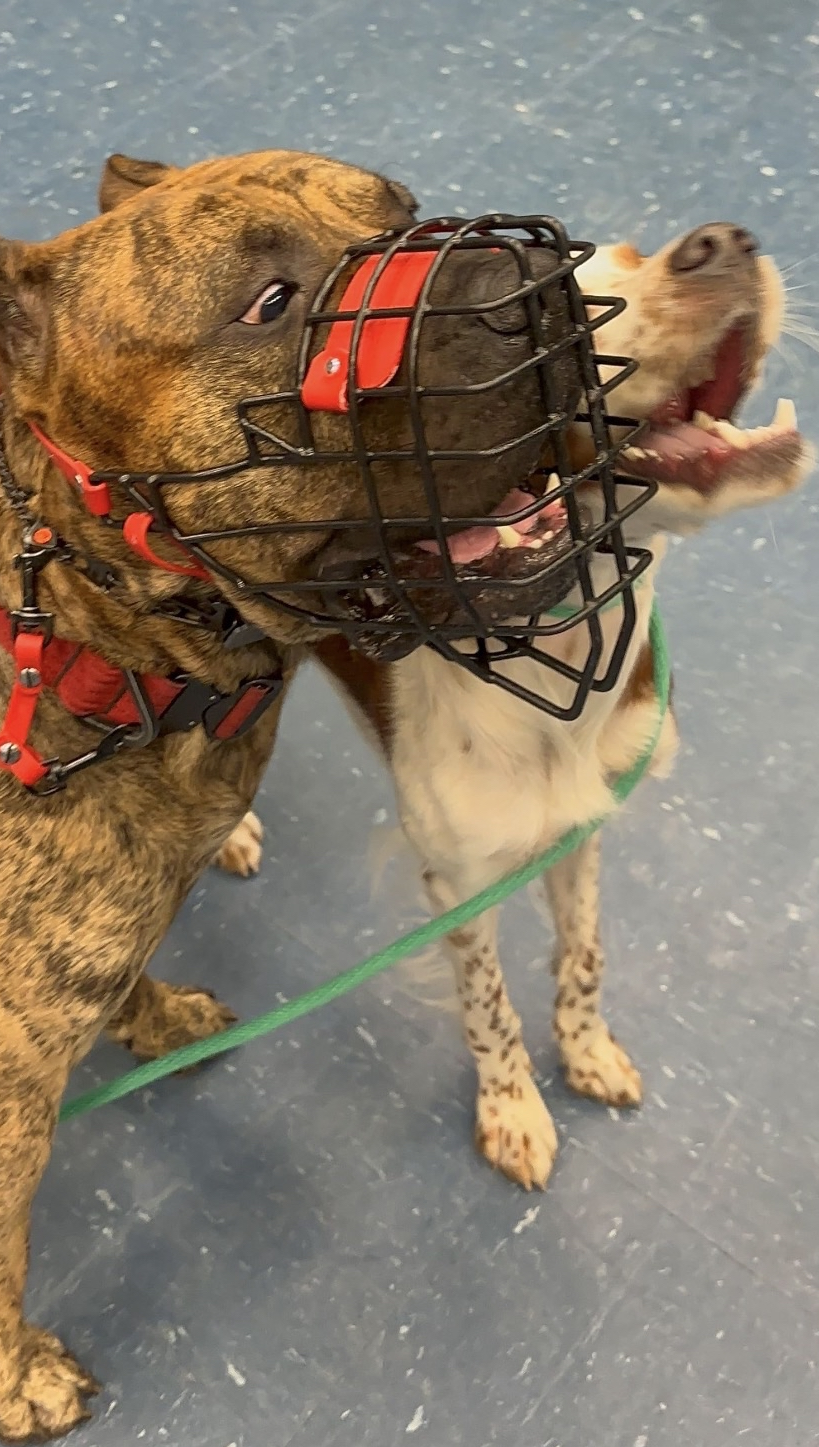
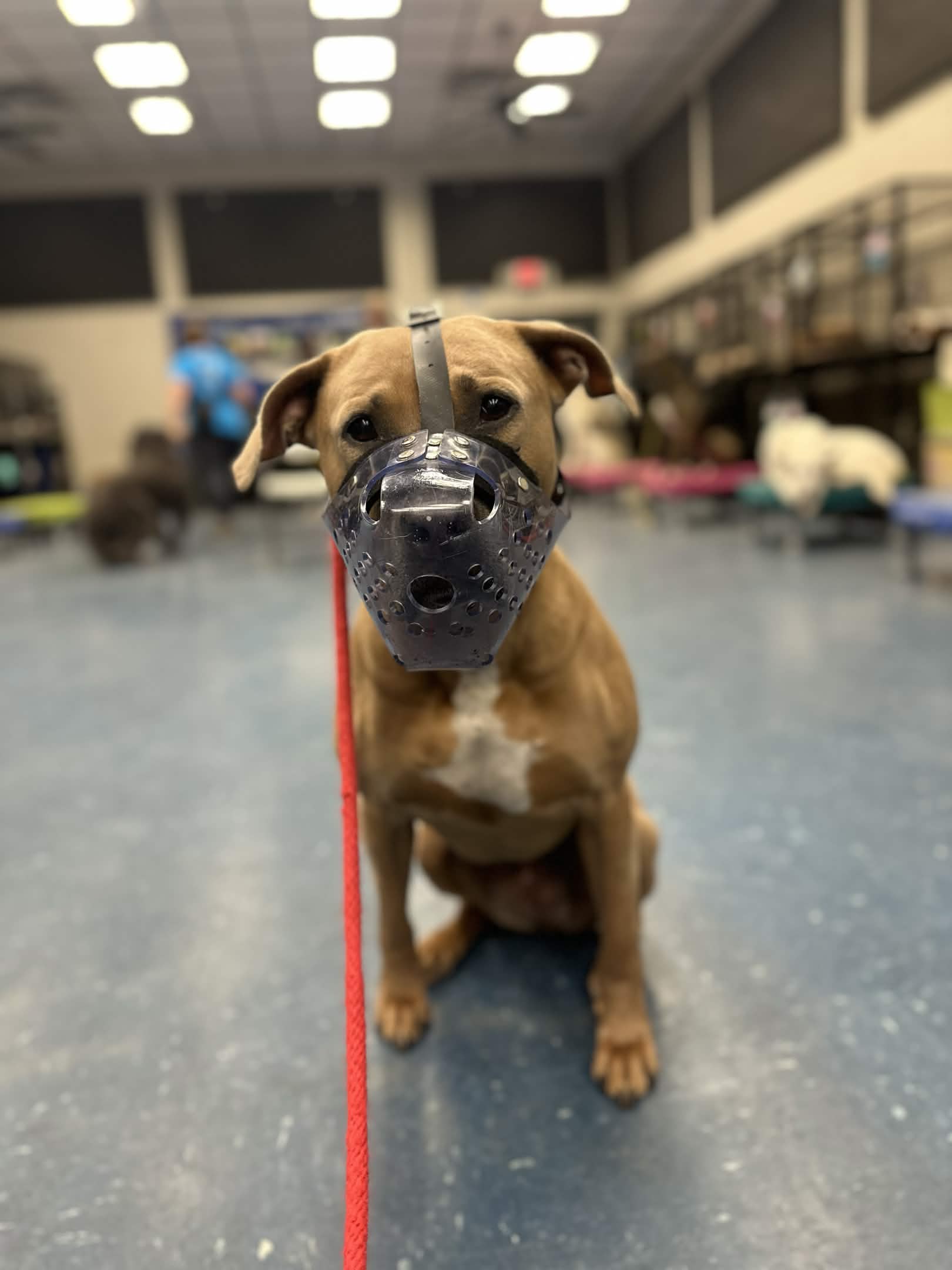
If you think muzzle training would make your training journey a little easier, reach out, we are happy to help. We have complete muzzle training instructions on our virtual training platform, and we can create a custom in-person training plan to help you meet your training goals as well.